



A 40-Year Journey
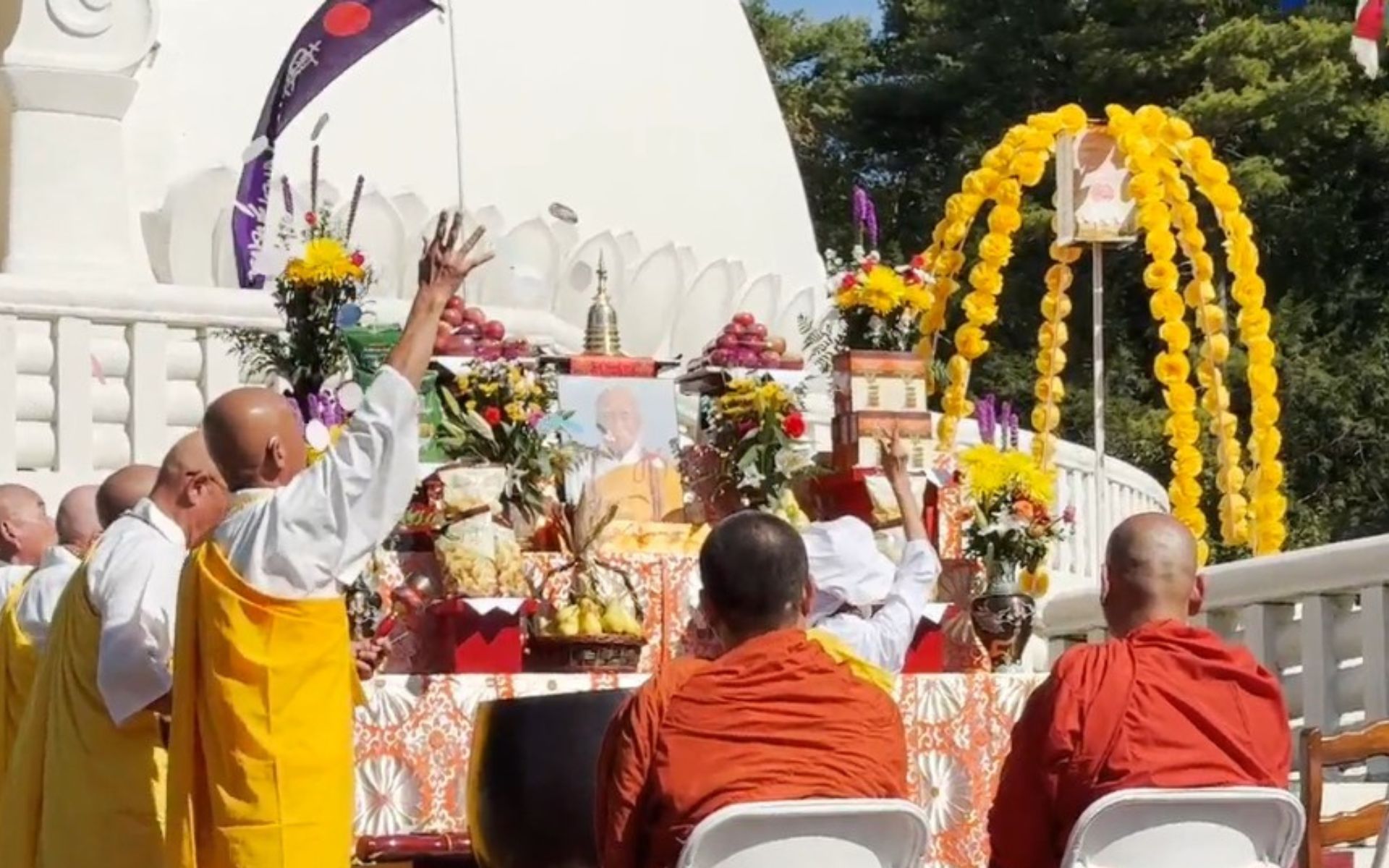
This weekend, Paul and I took our granddaughter, Molly Mae, to a very special place — the Peace Pagoda in Leverett, Massachusetts.
Paul’s sister, Jacquie, was a Buddhist nun for about 15 years and traveled all over the world walking and working for peace.
Forty years ago, she helped establish this very Pagoda, the first in the United States — a towering white structure called a stupa, surrounded by forest and silence — a place devoted to the idea that peace is possible if we begin within.
We first visited in the late 80s when Jacquie was living there, and returning now, with our granddaughter, felt like coming full circle.
Hundreds of people gathered to rededicate the Pagoda — monks, families, children, and elders from all walks of life.
When we arrived, a Native American was welcoming the crowd and leading us in a circle dance. The air was filled with the rhythmic sound of drums and then the ceremony with the monks began. A melodic chanting of the Lotus Sutra.
After the ceremony, representatives from different faiths — Muslim, Jewish, Baha’i, Catholic, and several Buddhist sects — were invited to speak.
Their prayers and stories brought tears to my eyes as they acknowledged the suffering and violence happening right now in places like Gaza.
Each spoke from the heart, reminding us that peace doesn’t belong to any one religion or country. It’s a universal human desire.
What struck me most was how this gathering reflected the same truth I see in leadership: we are all part of something bigger than ourselves. No one is more important than anyone else.
Each of us has a role to play in building a more peaceful, compassionate world — whether in our families, communities, or workplaces.
Leadership as a Path of Peace
Leadership, at its core, is about service. It’s about helping others succeed, removing obstacles, and creating an environment where people can do their best work.
Too often, we think of leaders as the ones “in charge” — the people with authority, titles, or influence.
But true leadership is not about control or power over others. It’s about power with others.
It’s about listening, encouraging, and empowering.
A peaceful leader doesn’t dominate — they facilitate.
They don’t use fear — they build trust.
They don’t divide — they connect.
Just like the monks who quietly tend to the grounds of the Pagoda every day, peaceful leaders do much of their work behind the scenes, ensuring that others can shine.
Their reward isn’t attention or recognition; it’s harmony, progress, and shared success.
The Cost of Leadership — and the Need for Renewal
But let’s be honest —compassionate leaders can burn out.
Taking care of people, managing emotions, and trying to hold a team together can be exhausting.
That’s why it’s so important for leaders to take care of themselves.
You can’t pour from an empty cup. Meditation, journaling, time in nature, or simply saying “no” occasionally are also acts of peace.
When Jacquie was walking across the country for peace, she told us that each step was a meditation — a prayer for healing.
I think leadership can be like that: one intentional step at a time, even when the path feels long or uncertain.
Toxic vs. Peaceful Leadership
Here’s a simple list that helps distinguish between two kinds of leadership — one that breeds tension, and one that cultivates peace:
Toxic Leadership
- Uses fear or guilt to motivate
- Takes credit and assigns blame
- Micromanages and controls
- Avoids feedback or differing opinions
- Burns out self and others
Peaceful Leadership
- Inspires through trust and example
- Shares credit and takes responsibility
- Empowers autonomy and creativity
- Welcomes honest dialogue
- Practices self-care and empathy
When we lead with peace, people feel safe to grow. And when people grow, organizations flourish.
Violence Is Never the Answer
Violence — whether physical, verbal, or emotional — never brings lasting peace. It only deepens wounds.
In our workplaces, violence may not look like bombs or guns, but it can take the form of harsh words, dismissive attitudes, or a lack of respect. These small acts of aggression can erode trust and productivity and can subtly sabotage the whole team dynamic.
As the Dalai Lama once said:
“Peace does not mean an absence of conflicts; differences will always be there. Peace means solving these differences through peaceful means — through dialogue, education, knowledge, and through human ways.”
That’s the kind of leadership the world needs right now — and the kind we can all practice, no matter our title or role.
Carrying the Flame Forward
As we walked back to the car after the ceremony, I mentioned to Molly Mae that I hoped she could bring her children here someday. Because that’s how peace continues — one heart, one generation at a time.
Leadership is not about being perfect; it’s about being present. It’s about remembering that everyone matters.
And it’s about renewing our own energy so we can keep doing the work — one peaceful, grateful step at a time.
“When another person makes you suffer, it is because he suffers deeply within himself. He does not need punishment; he needs help.” — Thích Nhất Hạnh
Kindness really does matter.
All my best,
Maureen